Key takeaways
In brief: B2B sales enablement is a system that equips customer-facing teams with the content, training, and tools they need to engage buying groups effectively. It aligns marketing, sales, and customer success around shared messaging, reduces deal friction, and creates the foundation AI tools need to provide accurate, trusted guidance.
What you’ll learn in this guide:
- What B2B sales enablement is — and why it matters more now that buyers use AI to research before talking to sales
- The 5 core pillars — content management, sales readiness, buyer engagement, intelligence, and AI-enabled support
- How to build a strategy — a 7-step framework you can implement without rebuilding your entire revenue engine
- KPIs that matter — leading indicators, lagging indicators, and how to tie enablement to revenue without overclaiming
- Common pitfalls to avoid — content chaos, training without reinforcement, poor handoffs, and more
- Tech stack essentials — what to look for in a modern sales enablement platform
- Advanced plays — AI personalization, role-based learning, mutual action plans, and revenue intelligence
What is B2B sales enablement?
B2B sales enablement is a system that gives customer-facing teams the content, preparation, and support they need to sell. It aligns marketing, sales, and customer success so sellers follow a shared approach instead of relying on personal habits.
The goal of sales enablement is to help teams engage buying groups with consistent messaging and dependable guidance. It gives sellers a predictable way to operate when buyers move through their evaluation with more information and less need for direct interaction. Effective enablement reduces friction for both sides by tightening the connection between content, training, and deal execution.
B2B sales enablement and AI
AI’s biggest impact on B2B sales won’t come from sellers — it’ll come from buyers. Today’s buyers now form opinions with AI before they ever talk to Sales. Sellers need AI simply to meet buyers at the level they now operate.
But many Sales teams are discovering that new AI tools don’t automatically solve old problems. Content remains difficult to navigate. Messaging becomes inconsistent as deals move forward. Training loses momentum once onboarding ends.
The reason is straightforward: AI can’t compensate for a weak foundation. In fact, it often accelerates whatever disorder already exists.
Modern B2B sales enablement fixes the foundation AI relies on. It establishes shared messaging. It defines the workflows sellers should follow. It creates the context needed for AI to produce guidance that’s trusted and actually used. Enablement gives AI something reliable to build from.
This guide will show you what effective B2B sales enablement looks like, in an environment where buyers use AI and sellers are supposed to benefit from it. You’ll learn how to create a scalable system that supports execution across deals, regions, and teams. And you’ll get a practical playbook you can put into motion without rebuilding your entire revenue engine.
If your team invested in AI and saw little improvement, the missing structure is almost always the reason. Keep reading to learn how to build it in a way that supports both sellers and buyers.
What makes B2B sales enablement more complex?
B2B sales enablement has to support buying groups that bring a wide mix of priorities and influence into the evaluation. These stakeholders often compare options internally before speaking with a seller, which means teams need consistent messaging and dependable content available long before the first call. Early impressions form quickly, and misalignment is difficult to correct once the conversation starts. This early-stage evaluation is where enablement has an outsized impact.
Compliance creates additional pressure. Legal, security, or regulatory reviews can slow a deal when information is outdated or scattered across systems. Enablement helps prevent these delays by keeping sensitive materials accurate and easy for sellers to share when a reviewer asks for them. This reduces the risk of bottlenecks during high-stakes diligence.
Regional variation adds its own complications to the B2B buying cycle. Teams in different markets may need content, workflows, or examples that reflect local expectations. When those adjustments happen informally, sellers operate from conflicting versions of the story. Central governance keeps these variations controlled without blocking local flexibility.
These conditions stretch Sales teams beyond what they can manage alone. A structured enablement system reduces this friction by keeping content, readiness, and buyer engagement aligned across all of these moving parts. This alignment becomes more important as AI-generated buyer research accelerates the pace and depth of internal evaluations.
B2B vs. B2C sales enablement: What’s the difference?
Sales enablement exists in both B2B and B2C environments, but the approach differs significantly based on how buyers make decisions. Understanding these differences helps you design an enablement program that matches your actual selling motion.
Key differences at a glance
| Factor | B2B Sales Enablement | B2C Sales Enablement |
| Buyer type | Buying committees (3–10+ stakeholders) | Individual consumers or households |
| Sales cycle length | Weeks to months (sometimes years) | Minutes to days |
| Decision complexity | High — involves budget approvals, legal review, security assessments | Low to moderate — typically personal preference and price |
| Content needs | Deep — ROI calculators, case studies, technical specs, compliance docs | Broad — product visuals, reviews, promotions |
| Personalization focus | Account-level and role-level customization | Segment-level or individual preference |
| Training emphasis | Consultative selling, objection handling, multi-threading | Product knowledge, brand messaging, upselling |
| Engagement model | Relationship-driven, multi-touch, collaborative | Transactional, often self-service |
| Primary success metric | Deal velocity, win rate, average contract value | Conversion rate, average order value, repeat purchase |
Why these differences matter for enablement
Buying committee complexity
In B2C, one person typically makes the purchase decision. In B2B, sellers must influence multiple stakeholders — each with different priorities, concerns, and levels of authority. Enablement must equip sellers with content and talk tracks tailored to each persona: the end user who wants ease of use, the IT leader who wants security, and the CFO who wants ROI.
Longer sales cycles require sustained engagement
B2C enablement often focuses on the moment of purchase. B2B enablement must support conversations that span months. This means sellers need digital sales rooms to maintain momentum, mutual action plans to keep deals on track, and refresher training to stay sharp throughout extended evaluations.
Higher stakes demand deeper proof
B2B buyers face career risk if they choose the wrong vendor. They need case studies from similar companies, third-party validation, ROI models, and answers to tough technical questions. Enablement must make this proof easy to find and easy to share — not buried in a folder somewhere.
Compliance and governance add friction
Regulated industries like financial services, life sciences, and healthcare require strict control over what sellers can say and share. B2B enablement platforms must include version control, approval workflows, and audit trails that B2C environments rarely need.
The bottom line
B2C enablement helps sellers close faster. B2B enablement helps sellers navigate complexity. Both require content, training, and tools — but B2B programs must account for longer timelines, more stakeholders, and higher scrutiny at every stage.
The Definitive Guide to the Most Important Sales Enablement Metrics
If you want to increase productivity and effectiveness of the sales, marketing, and enablement teams at your organization, you have to focus on metrics that matter.
Learn how each metric is defined, how it’s calculated, and how you can improve it.


The 5 core pillars of B2B sales enablement
Most sellers don’t struggle because of skill; they struggle because critical information lives in too many places. The following core components remove that friction:
1. Content management and personalization
Sellers need content they can trust. That means materials must be current, easy to locate, and consistent. When content lives in scattered sources, sellers waste time patching together information or creating their own versions. A governed library eliminates guesswork and reduces version drift.
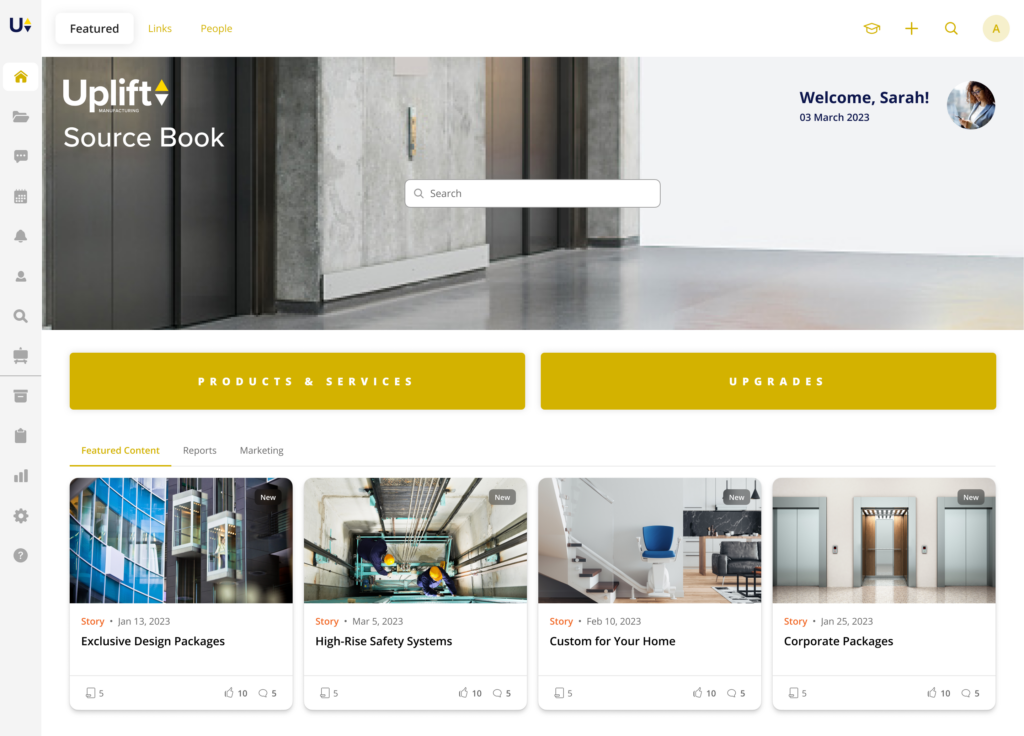
Personalized homescreen for manufacturing sales in Bigtincan
Personalization builds on that foundation. Buyers want materials that reflect their situation, not generic explanations. Enablement helps by keeping controlled versions of demos, value stories, ROI materials, and regulated documents, and by guiding sellers on how to tailor them without drifting from approved messaging.
2. Sales readiness and coaching
Readiness prepares sellers to handle real conversations. It gives new hires a structured way to ramp, and also helps experienced reps stay sharp as messaging evolves.
This work often includes onboarding tracks, microlearning, live practice scenarios, certifications, and refreshers tied to product or market changes.
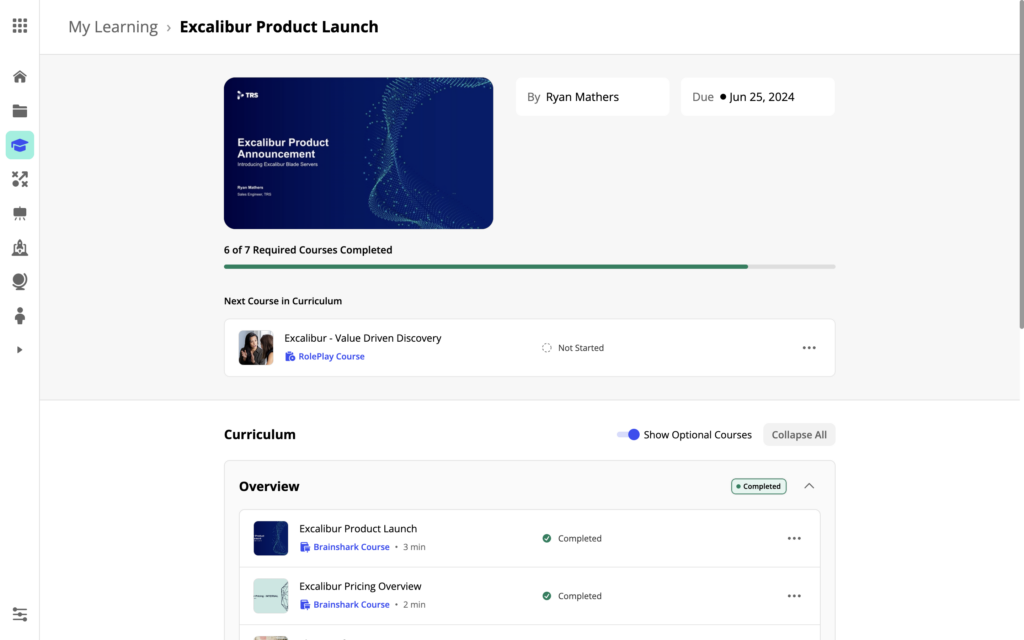
B2b sales enablement learning curriculum in Bigtincan with microlearning, roleplays, and more
Coaching turns readiness into execution. Managers can use call reviews, deal observations, and structured feedback to reinforce skills in the field.
When readiness and coaching operate together, sellers build habits that hold up under pressure, even as buyer expectations shift. This is where enablement has a direct influence on performance, not just preparedness. For instance, Lynita Halaska, a Capability Lead within the Sales Operations team at Lion Australia, reported a 24% performance lift among sellers who completed their guided enablement tasks.
Read more about how Lion Australia transformed their enablement program.
3. Buyer engagement and digital sales rooms
Buyer engagement is no longer limited to scheduled meetings or email threads. Most evaluations involve ongoing internal discussions, informal comparisons, and surprise stakeholders joining midway through the process.
Sellers need a collaborative space where buyers can review materials and see next steps. Without this shared context, deals develop in ways sellers can’t see or influence.
Digital sales rooms give every opportunity a central workspace. Sellers can share decks, summaries, recordings, or mutual action plans in one location, which helps buyers keep momentum even when internal purchase cycles slow things down.
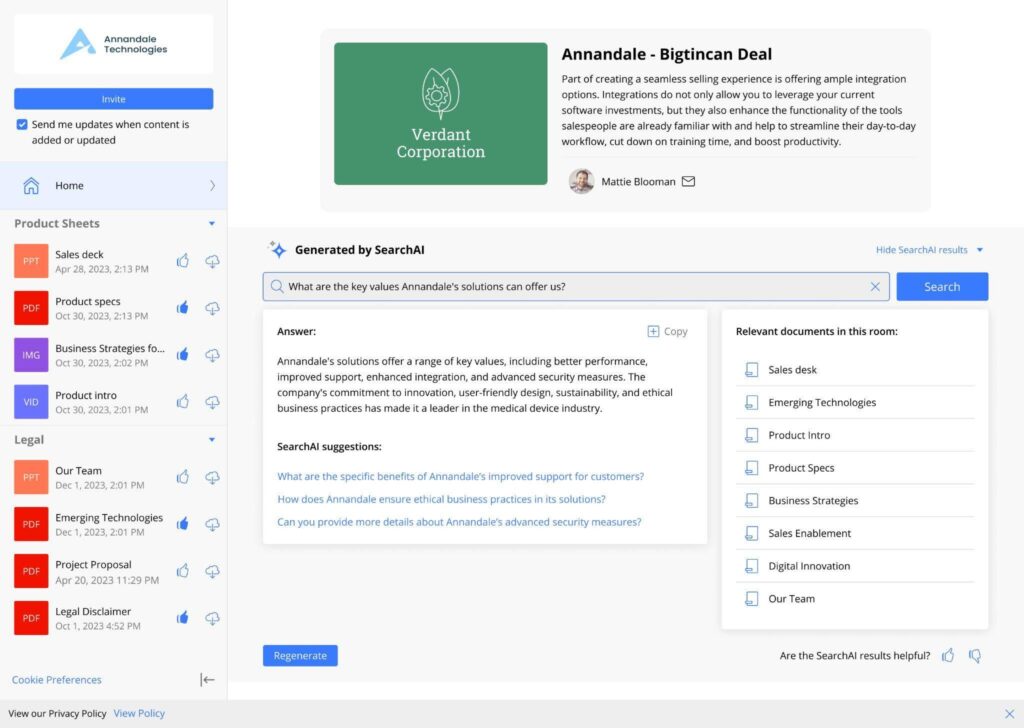
SearchAI in a DSR
These rooms also make it easier to bring new decision-makers into the conversation without replaying earlier steps. They create continuity across meetings, stakeholders, and decision phases — essential in complex B2B cycles.
Read more about the best digital sales rooms tools and how to use them.
4. Intelligence and analytics
Sales intelligence helps teams understand how deals are progressing. Analytics surface signals about buyer behavior, identify friction inside the process, and show how materials or conversations influence decisions.
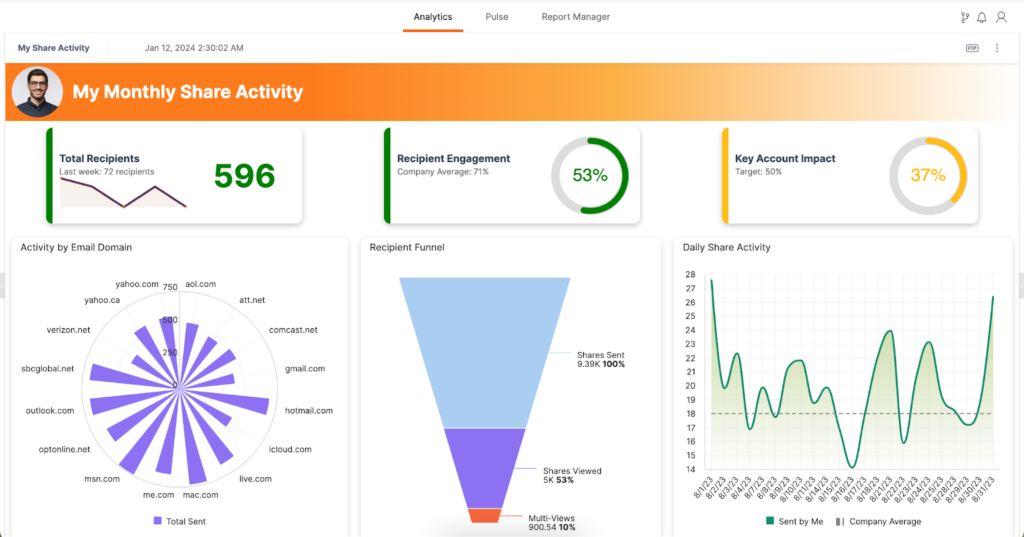
Buyer insights: content to opportunity phase dashboard in Bigtincan
Instead of relying on assumptions, teams get a clearer view of what happens inside opportunities. This visibility allows sellers to adjust earlier, before small issues turn into stalled deals.
Leaders can use these insights to adjust coaching or refine plays before issues spread across the pipeline. Meanwhile, sellers can use them to spot moments of hesitation or renewed interest. Over time, this creates a more predictable motion, because decisions are based on actual data rather than guesswork.
5. AI-enabled support systems
AI can significantly improve enablement, assuming the underlying system is well-structured. It can surface helpful content faster and reduce manual work that slows down the Sales team. During or after calls, AI can highlight moments that need attention and point out signals that might otherwise be missed.
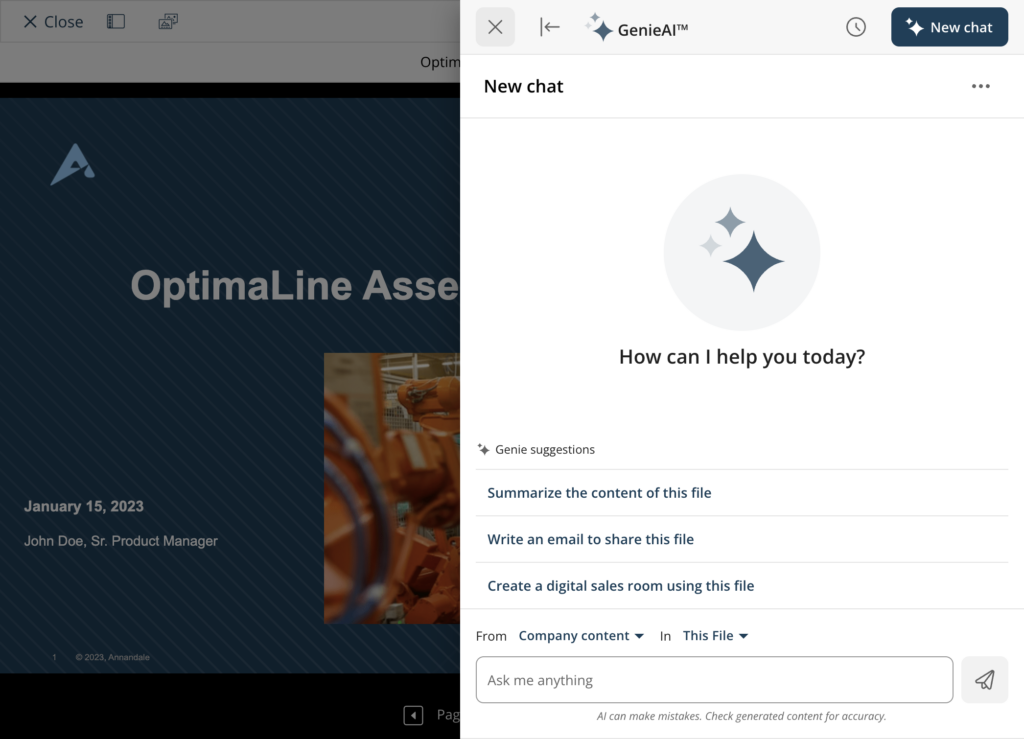
GenieAI in Bigtincan
AI can also assist with drafting follow-ups or adapting content for specific buyer needs. But its value depends entirely on the consistency of the library and the clarity of the message it draws from. When those fundamentals are strong, AI becomes a useful extension of the enablement workflow. When they’re missing, AI tends to magnify inconsistencies, which is why a solid enablement foundation is so important.
How B2B marketing and sales enablement work together
Marketing and sales enablement often work on different timelines, but their success depends on the same outcome: revenue. Buyers expect a consistent story from the first touchpoint through to the final decision, and that only happens when both teams operate from shared goals and a clear view of the buyer journey.
Both Marketing and Enablement need clarity on who they’re targeting and what problems actually matter to those buyers. When Marketing sets the direction, Enablement can build the plays, content, and coaching that help sellers carry that message into real conversations. If this alignment is missing, the story buyers see in campaigns doesn’t match what they hear on calls.
Feedback loops are key to making the partnership useful. Marketing rarely sees how content performs once it enters a deal, but Enablement does. The Enablement team can spot when an asset gets shared often but fails to move the conversation forward, or when sellers rewrite messaging because the original version doesn’t land. Passing that information back prevents Marketing from creating content that looks polished but doesn’t help anyone close a deal.
When Marketing and Enablement work in sync, sellers spend less time trying to figure out which message is correct, and buyers get a smooth experience from first touch to final decision. The story stays coherent, and nobody has to guess what the buyer saw before the first meeting.
How to build a modern B2B sales enablement strategy
A B2B sales enablement strategy typically includes:
- A full audit of content, skills, and tools
- Clear personas and buying-committee profiles
- Content and training mapped to each stage of the buyer journey
- A centralized enablement platform with key integrations
- Structured readiness programs and manager-led coaching
- Defined KPIs and analytics workflows
- A regular cadence for content, playbook, and coaching updates
But a modern enablement strategy shouldn’t be a giant transformation project. You don’t need to fix everything at once for the program to start working. What matters is creating a structure that keeps content, training, and buyer engagement connected instead of operating as separate efforts.
Below is the sequence most teams follow when building or upgrading their enablement motion. You can run it as a full program or focus on the parts that address your biggest gaps first.
1. Audit your current content, skills, and tools
Start by understanding what you already have and what’s missing. Most teams discover outdated decks, duplicate assets, inconsistent messaging, and training that doesn’t reflect how sellers actually work. This step also helps you see which tools are helping the process and which ones are adding noise. A simple inventory gives you a baseline and avoids rebuilding content that still works.
2. Define your buyer personas, buying committees, and core pains
You can’t support sellers if you’re unclear about who they’re selling to. Map out the roles involved in the purchase process, what each one cares about, and the points where they typically get stuck. This becomes your reference point for content, plays, messaging, and coaching. It also prevents the common problem of sellers tailoring everything around a single champion while the real decision-maker stays unconvinced.
3. Map content and training to each stage of the buyer journey
Once you understand your buyers, connect your assets and training to the moments where sellers actually need them. Early-stage conversations need problem framing. Mid-stage evaluations need proof and clarity. Late-stage cycles need validation materials buyers can take into their internal meetings. Mapping everything to the journey keeps sellers from improvising and helps buyers move forward with fewer delays.
4. Implement an enablement platform and key integrations
If sellers are still jumping between folders, inboxes, and spreadsheets, even strong content won’t get used. An enablement platform centralizes content, coaching, and buyer engagement in one place. Integrating it with your CRM, email, calendar, meeting tools, or CMS saves sellers time and gives leaders better visibility into what’s actually happening inside deals. The platform becomes the operational base for everything that comes next.
5. Roll out readiness programs and manager-led coaching
Training isn’t just about onboarding; it needs to drive ongoing behavior change. Give sellers learning paths that reflect real customer questions and objections rather than just product documentation. Then support managers with simple coaching tools they can use every week, like structured call reviews, scenario practice, and focused feedback. This combination builds repeatable habits and keeps the message stable as the market evolves.
6. Operationalize analytics and define your KPIs
You can’t improve what you can’t see. Enablement needs clear reporting on content usage, buyer engagement, readiness completion, and early indicators like call quality or time-to-first-meeting. These metrics help you identify bottlenecks and refine your plays. Plus, the more consistent the metrics, the easier it becomes to tie enablement work to revenue outcomes.
7. Establish a continuous improvement cadence
Enablement is never “finished.” Content ages, messaging shifts, and product updates introduce new questions. A review cadence keeps everything current without overwhelming the team. Consider setting up monthly content reviews, quarterly play updates, or weekly coaching topics. The cadence matters less than the consistency. When sellers know the system evolves with them, adoption is much easier.
Want a practical way to put this into motion? Download the 90-day B2B Sales Enablement Launch Plan — a week-by-week guide to improving seller readiness, content effectiveness, and buyer engagement.
KPIs and metrics that matter in B2B sales enablement
Enablement becomes significantly more effective when teams stop treating it as a support function and start measuring its impact on seller behavior and buyer movement. A good KPI framework shows you what’s working, what’s slowing deals down, and where sellers need more support.
It also gives leadership a clear view of why enablement exists, and why it deserves investment. For example, Matthew Wright, VP of Global Professional Education at Allurion Technologies, told us that when his team calculated the ROI of their professional education program, they found that every dollar invested generated about $8.50 in return.
Read more about how Allurion gets an 850% ROI on their professional education spend.
Leading indicators: signals of seller readiness and buyer engagement
Leading indicators tell you whether your enablement program is influencing the early stages of the deal cycle.
- Content usage: which assets sellers trust enough to use and which ones buyers return to
- Findability and share velocity: how quickly sellers can locate materials and whether they share them reliably
- Time-to-first-meeting: speed from initial outreach to a qualified conversation
- Certification and training completion: whether readiness programs are building baseline competence
- Call scores: discovery quality, clarity of value, and follow-through on next steps
These metrics don’t guarantee revenue outcomes, but they show whether sellers are prepared and buyers are responding.
Lagging indicators: signals of revenue impact
Lagging indicators help you understand whether improved enablement translates into better deal outcomes.
- Win rate: whether improved messaging and training show up in closed business
- Deal velocity: how fast opportunities move through the pipeline
- Average contract value: whether sellers articulate value in a way that expands deals
- Ramp time: how long new hires take to reach productivity
- Retention and expansion: whether the message holds up after the sale, especially in complex environments
Attribution: tying enablement to revenue without overclaiming
Enablement attribution works best when it’s directional, not absolute. You can show influence by:
- tracking which assets appear in closed-won deals
- measuring conversation improvements after coaching cycles
- mapping content engagement to stage progression
- comparing performance between trained and untrained cohorts
Executives rarely expect perfect attribution. They want a clear view of whether enablement changes seller behavior and buyer response, and whether those changes move revenue.
You measure B2B sales enablement by tracking:
- Leading indicators: content usage, findability, time-to-first-meeting, certification rates, call scores
- Lagging indicators: win rate, deal velocity, ACV, ramp time, retention and expansion
- Attribution signals: content influence on deal stages, improvements after coaching, performance gaps between trained and untrained cohorts
Ready to start measuring your enablement program more accurately? Download the week-by-week enablement launch checklist that shows how to stand up analytics, readiness programs, and buyer engagement in 90 days.
5 common B2B enablement pitfalls and how to avoid them
Even well-funded enablement programs stumble for predictable reasons. Most failures have less to do with skill and more to do with operational gaps. The most common reasons for enablement failure include:
-
Content chaos
If sellers can’t find what they need, they will recreate assets or rely on outdated decks. Fix this by centralizing every approved asset in one platform, tagging them consistently, and retiring anything sellers shouldn’t use.
-
Training without reinforcement
Onboarding can boost confidence for a few weeks, but sellers may forget the material once they’re in live deals. Build a reinforcement plan that includes short practice scenarios every week, manager-reviewed call clips, and targeted refreshers whenever messaging or product details change.
-
Poor marketing–sales handoffs
Buyers see one story in campaigns and a different one in discovery calls. To avoid this, create shared plays that spell out the positioning, proof points, and assets sellers should use, then review those plays together after every major launch or messaging update.
-
Over-measuring activity, under-measuring outcomes
Don’t celebrate course completions and content uploads, while ignoring whether buyers actually move forward. Shift to outcome metrics such as meeting-to-opportunity conversion, stage progression after specific assets are shared, and improvements in call quality tied to coaching cycles.
-
Skipping change management
It’s a mistake to roll out new tools or processes and assume sellers will adopt them. Make adoption deliberate: communicate what’s changing, demonstrate how the change reduces seller effort, highlight early wins in team meetings, and coach managers to reinforce the new workflow in their 1:1s.
Tech stack essentials: choosing the right platform
Common tools used for B2B marketing and sales enablement include:
- Sales enablement platforms (content management, DSRs, readiness, analytics, AI support)
- CRM systems like Salesforce
- Productivity suites such as Microsoft 365 or Google Workspace
- CMS and LMS platforms for content and training
- Conversation intelligence and calling tools for coaching and deal visibility
What to look for in a modern sales enablement platform
A modern platform should support the full revenue workflow, not just store content. Key capabilities include:
- AI-driven search and content recommendations so sellers can surface the right asset instantly, even mid-call.
- Deep CRM and meeting-tool integrations that automatically capture content usage, call insights, and deal activity without extra admin work.
- Governance and version control to keep messaging consistent across regions, products, and teams — reducing “rogue” content and outdated decks.
- Unified analytics that show which materials influence deal progression and where sellers or buyers experience friction.
- Built-in authoring and approval workflows that speed up updates and reduce marketing’s manual workload.
- Digital sales rooms (DSRs) for sharing content, aligning stakeholders, and maintaining momentum between meetings.
- Conversation intelligence to help managers spot where messaging breaks down and where coaching is needed.
- Seamless integrations with Salesforce, Microsoft 365, Google Workspace, your CMS, your LMS, and calling platforms so the system feels like an extension of the existing workflow, not another tool to juggle.
Advanced plays to excel at B2B sales enablement
Once the fundamentals are in place (governed content, structured readiness, consistent coaching, and clear analytics) you can start layering on advanced plays that deepen alignment and sharpen execution.
AI-driven content personalization
AI gives sellers a way to tailor messaging without rewriting assets from scratch. Teams can generate variations of value stories, product descriptions, or outreach messages that reflect industry language, regional norms, or specific buyer challenges while staying within approved guidelines. This keeps personalization controlled rather than ad hoc.
Role-based learning paths and scenario-based assessments
Not every seller needs the same training. SDRs, AEs, SEs, and partners each face different pressure points in deals. Role-based paths help sellers build only the skills they need, and scenario-based assessments test whether they can apply those skills in real conversations. This approach moves readiness from theory to execution.
Mutual action plans and stakeholder mapping inside DSRs
Complex evaluations involve recurring internal conversations that sellers never see. Embedding mutual action plans inside digital sales rooms gives buyers a shared reference point: next steps, owners, dates, and links to key materials. Adding stakeholder mapping helps sellers understand who else is involved and whether the deal is losing momentum.
A revenue intelligence layer for predictable growth
By combining content engagement, call insights, deal movement, and coaching signals, revenue teams can spot patterns that aren’t obvious in the CRM alone. Intelligent alerts highlight deals that are stalling, messaging that isn’t landing, or reps who need support. This helps teams shift from reactive management to proactive guidance.
Frequently asked questions about B2B sales enablement
What is B2B sales enablement?
B2B sales enablement is a system that provides customer-facing teams with the content, training, coaching, and tools they need to engage buying groups effectively. It aligns marketing, sales, and customer success around shared messaging so sellers follow a consistent approach rather than relying on personal habits. The goal is to reduce friction for both sellers and buyers throughout the entire deal cycle.
What are the main components of a B2B sales enablement program?
A comprehensive B2B sales enablement program includes five core pillars:
- Content management and personalization — A governed library of sales materials that sellers can find, trust, and tailor
- Sales readiness and coaching — Onboarding, ongoing training, and manager-led coaching to build and reinforce skills
- Buyer engagement and digital sales rooms — Shared workspaces where sellers and buyers collaborate throughout the evaluation
- Intelligence and analytics — Data on content usage, buyer behavior, and deal progression to guide decisions
- AI-enabled support systems — Tools that surface content, assist with follow-ups, and highlight coaching opportunities
How is B2B sales enablement different from sales training?
Sales training is one component of enablement — but enablement goes further. Training focuses on building skills. Enablement connects those skills to the content, tools, and workflows sellers need to apply them in real deals. A seller might complete training on discovery questions, but enablement ensures they also have the right materials to share, a digital sales room to collaborate in, and analytics to see whether their approach is working.
Who owns sales enablement in a B2B organization?
Ownership varies by company size and structure. In some organizations, enablement sits within Sales Operations. In others, it reports to Marketing, Revenue Operations, or a dedicated Enablement function. Regardless of where it lives, effective enablement requires close collaboration between sales, marketing, product marketing, and customer success. The owner’s job is to orchestrate these teams around shared goals and a unified buyer experience.
How do you measure the success of a B2B sales enablement program?
Measure enablement using both leading and lagging indicators:
- Leading indicators show whether sellers are prepared and buyers are engaging: content usage, training completion, time-to-first-meeting, and call quality scores
- Lagging indicators show whether enablement translates to revenue: win rate, deal velocity, average contract value, ramp time, and customer retention
Attribution works best when it’s directional — tracking which content appears in closed-won deals, measuring performance differences between trained and untrained cohorts, and mapping engagement to stage progression.
What tools are typically included in a B2B sales enablement tech stack?
Common tools include:
- Sales enablement platforms for content management, digital sales rooms, readiness, and analytics
- CRM systems like Salesforce to track deals and integrate enablement data
- Conversation intelligence tools to analyze calls and identify coaching opportunities
- Learning management systems (LMS) for structured training programs
- Content management systems (CMS) for marketing asset creation
- Productivity suites like Microsoft 365 or Google Workspace for day-to-day collaboration
The best enablement platforms integrate with these tools so sellers don’t have to jump between systems.
How long does it take to implement a B2B sales enablement program?
Implementation timelines depend on scope and starting point. A foundational program — with centralized content, basic training paths, and core analytics — can be operational within 90 days. More advanced capabilities like AI-driven personalization, conversation intelligence, and revenue analytics typically roll out in phases over 6–12 months. The key is starting with the areas that address your biggest gaps rather than trying to fix everything at once.
How does AI fit into B2B sales enablement?
AI enhances enablement when the underlying system is well-structured. It can surface relevant content faster, draft personalized follow-ups, highlight coaching moments from calls, and identify signals that indicate deal risk. However, AI amplifies whatever foundation exists. If content is disorganized or messaging is inconsistent, AI will magnify those problems. Strong enablement gives AI something reliable to build from.
What are the most common B2B sales enablement mistakes?
The most common pitfalls include:
- Content chaos — Sellers can’t find what they need, so they create their own versions
- Training without reinforcement — Onboarding happens, but skills fade without ongoing practice
- Poor marketing-sales handoffs — Buyers see one message in campaigns and hear a different one on calls
- Measuring activity instead of outcomes — Tracking course completions instead of deal progression
- Skipping change management — Rolling out tools without helping sellers understand why and how to use them
Can small sales teams benefit from sales enablement?
Yes. In fact, smaller teams often see faster impact because changes reach everyone quickly. A small team with organized content, clear messaging, and basic coaching rhythms will outperform a larger team where every seller operates differently. Enablement doesn’t require a massive investment — it requires intention and consistency.
Next steps for your B2B sales enablement strategy
B2B sales isn’t getting simpler, and AI isn’t going to magically fix broken workflows. But a strong enablement system can. When you give sellers governed content, practical training, clear plays, analytics that mean something, and AI that reinforces what’s already working, the entire motion becomes easier to execute and easier to improve.
Whether you’re just starting or modernizing an existing program, you don’t need a massive rebuild. You need a foundation that ties everything together.
If you want to see how this looks inside a real platform, take a product tour.